


Getting players to act without being told. A tutorial redesign
Context
2025 • Live project
Role
UX/UI Designer
Methods
Playtesting, comparative analysis, prototyping
Focus
Educational UX, onboarding
.png)
Problem
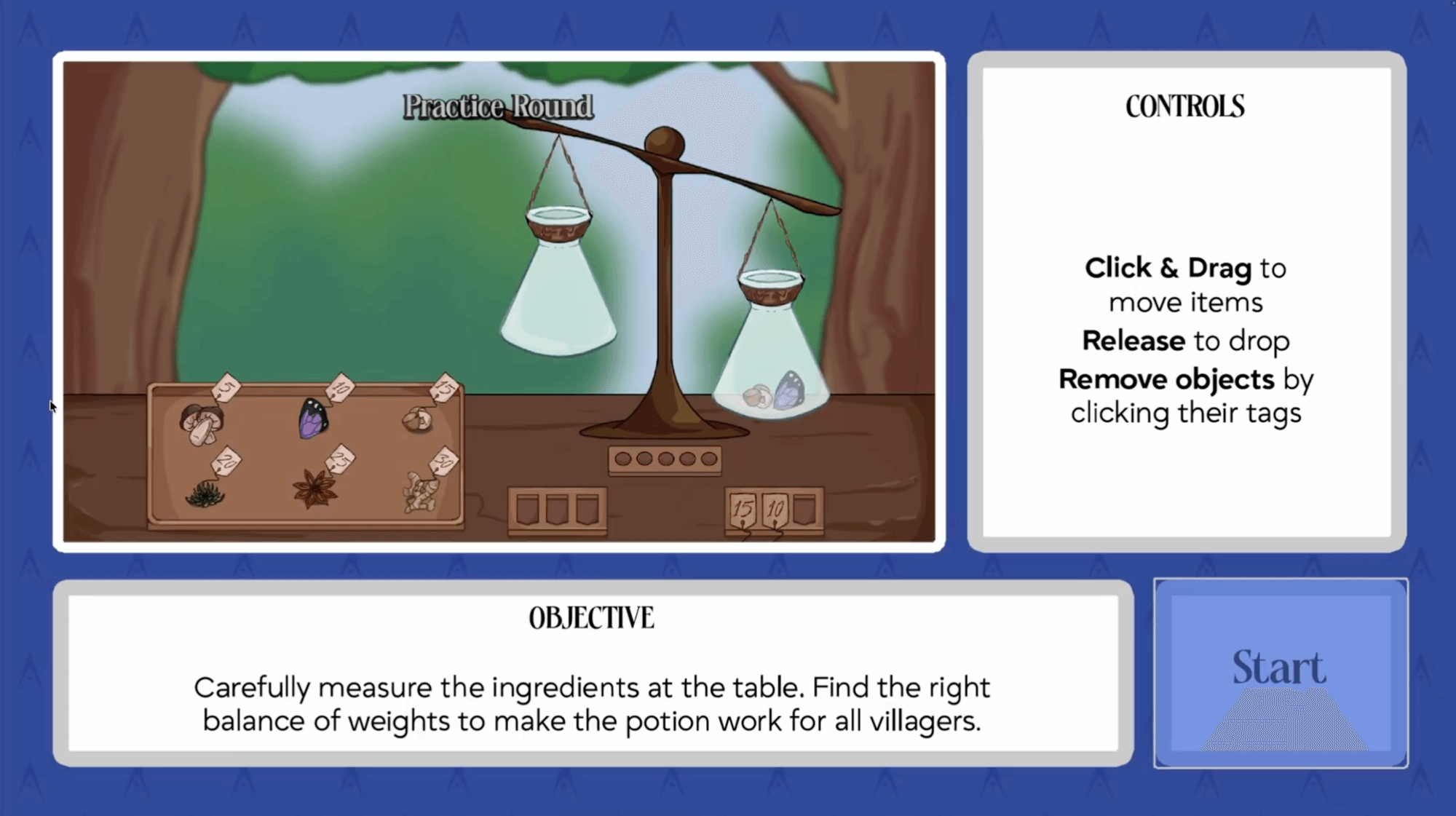
The tutorial asked players to act, but nothing told them it was their turn. Without a clear prompt, players defaulted to watching instead of doing.
Testing Insight
During playtesting, players treated the practice round as a demo.
They sat back, waiting for something to happen. Some tapped Start without ever touching an ingredient. Each failure pointed to the same root: the tutorial presented information instead of directing attention. The redesign had to move, speak, and point.
Research
How do the best mini-games teach a mechanic in under 10 seconds?
I played 8 mini-games back to back, watching how each handled first contact. Three patterns showed up in the ones that worked.

Just-in-time information
One mechanic at a time, introduced when it's needed, not front-loaded.

Narration creates order
A wall of text has no reading order. A narrator's voice does. It moves through the screen and tells players where to look next.

Prompting the players
Motion, glow, or a direct cue. Without one, an empty space reads as "done," not "your turn."
Hypothesis
Pairing sequential narrator introductions with real-time visual highlighting of named elements will enable tutorials to engage the three cues (move, speak, and point) that successful mini-games use but ours didn't.
Design Solution
From static modal to narrated sequence
A narrator introduces each element in turn, and each one lights up as it's named. The tutorial now moves, speaks, and points, the three cues that competing games were using but ours was not. It stops feeling like a rulebook and starts feeling like a character guiding the player through their first minute.
Impact